Wooden Egg Crate
Title
Wooden Egg Crate
Subject
This 1950 wooden egg crate reflects Omaha's local food system. It marks the end of pre-industrial poultry farming. Early settlers brought chickens to America. They were not a widespread food until the mid-1800s. Then chickens became more popular, and this increased the demand for eggs. After World War II, the need for cheap protein grew. Programs like the "Chicken of Tomorrow" Contest aimed to breed larger chickens in less time. Farmers also bred hens to increase egg production. New antibiotics and farming methods helped the U.S. lead a global rise in chicken production. Local farms fell behind the large companies. The use of chicken litter pollutes nearby ecosystems. Layer chicken litter is a mixture of waste, bedding, and leftover feed used for farming. This history shows the effects of industrial farming on labor and the environment. The human impact on chickens reveals how these systems are shaping the Anthropocene.
Description
The transition from small, local poultry farms to large, industrial operations represents a significant turning point in the environmental history of Omaha, the U.S., and the world. This transformation, driven by capitalism and the demand for cheap, mass-produced protein, led to chickens becoming the world’s most produced and consumed protein source. However, this industrialization came at a significant environmental cost, contributing to resource depletion, ecological imbalances, and widespread degradation. In this context, the wooden egg crate found in Omaha is a powerful symbol of the Anthropocene, reflecting the human-driven industrialization of chicken farming and its lasting impact on the environment and the biosphere.
Chickens were introduced to the Americas by European settlers around the time of the establishment of Jamestown (Gordon, 1997). Their progenitor, the red junglefowl (Gallus gallus), was thinner than modern chickens and often nested in trees (Alder, 2012). These birds were practical companions on transatlantic voyages due to their resilience and ability to provide both meat and eggs. Despite their utility, poultry remained a peripheral part of the American diet through the early 20th century. For centuries, chickens roamed barnyards, foraging and mating naturally. They were a minor agricultural concern (Alder, 2012).
The mid-19th century marked a turning point in poultry farming. The "hen fever" craze, which spread across Europe and America from 1845 to 1855, popularized ornamental poultry breeds. During this period, the U.S. imported a diverse range of chickens from around the world, and breeding and crossbreeding gained significant attention (Burnam, 1855). Technological innovations, such as the invention of incubators in the 1870s, transformed the breeding process. In the 1870s, the value of ornamental plumage declined, and plumbers were employed to focus on egg production (Bugos, 1992). Ultimately, while the chicken initially gained attention for its vibrant feathers, it was the egg that propelled the chicken in industrial farming.
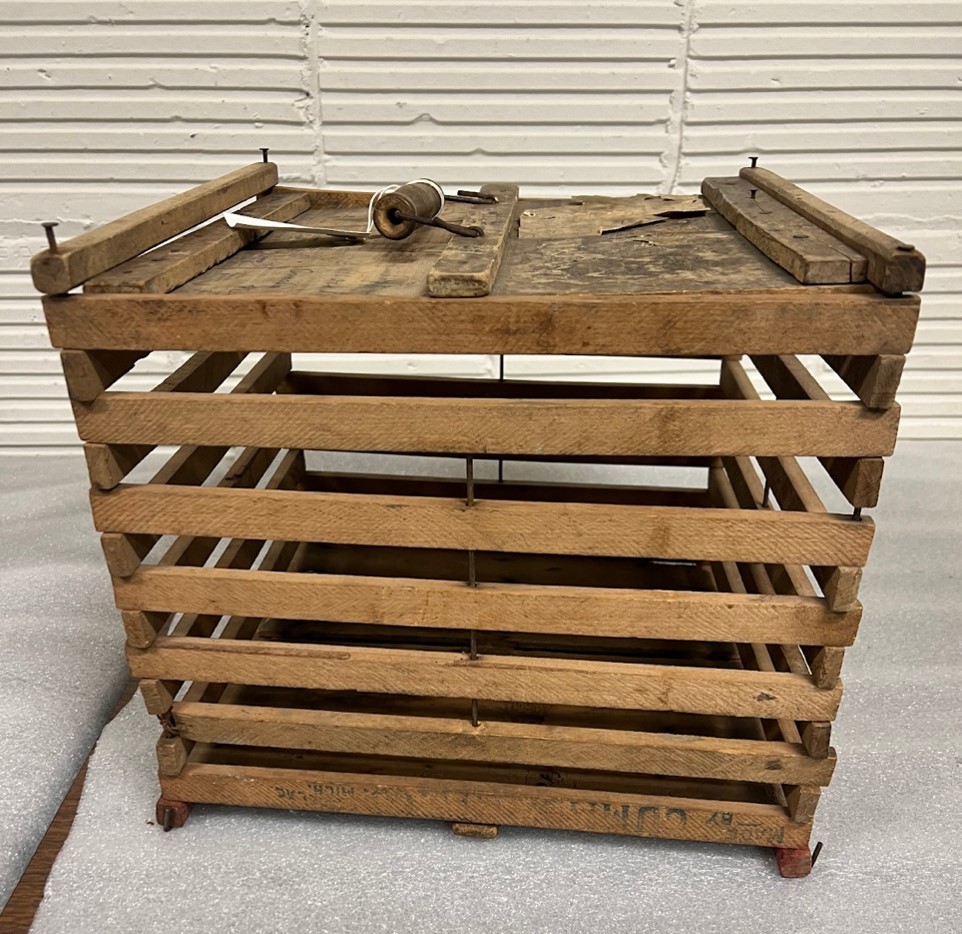
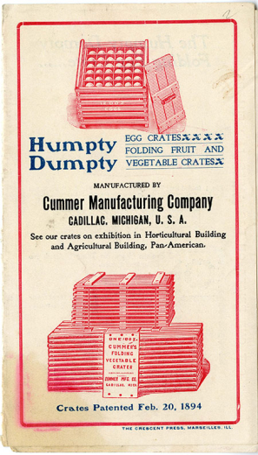
Like many parts of America, East Omaha was home to small, family-run farms that supplied the city with fresh produce, meats, and poultry in the 19th century (Fletcher, 2017). Poultry practices were casual and often managed by farmers' wives as chickens were largely self-sufficient. Families collected eggs year-round and consumed chickens seasonally, and surplus eggs were sold in local markets. Accordingly, in 1894, the Cummer Manufacturing Company patented the “Humpty Dumpty Egg Crate,” a wooden crate designed to carry up to 12 dozen eggs (Warshaw Collection, 2024) (Figure 2). Manufactured in Michigan, this particular crate, found in The Durham Museum Permanent Collection, is marked with the date December 1950. During the late 19th century and early 20th century, this egg crate would have been valuable to farmers traveling to local markets to sell their surplus eggs (Figure 1). The egg crate thus serves as a symbol of the pre-industrial poultry farming era, when small-scale, family-run farms were the primary source of food production.
Egg production expanded and industrialized throughout the early 20th century, with chickens increasingly viewed as "mechanical oviducts," tools for efficient egg production rather than natural organisms. The introduction of electric lighting and artificial incubators further boosted production, allowing for extended laying seasons and year-round egg production. Competitions like the 1926 International Baby Chick Association (IBCA) contest in Georgia, which offered around $21,000 in awards, highlighted the industry's competitive drive. These competitions contributed to the growing trend of industrialized farming, encouraging breeders to push for greater egg yields at the expense of the hens' health. Methods to increase egg production negatively affected the genetic fitness of hens, leading to physical deterioration, including bone fragility, as many were unable to sustain their egg output through feed intake alone (Bryerly, 1976).
The industrialization of egg production set the stage for the development of the broiler industry in the following decades, marking a significant shift from egg production to meat production. After World War II in America, red meats such as pork, beef, veal, and lamb were tightly rationed. This led to an increased interest in the development of poultry production. The "Chicken of Tomorrow" initiative in the 1940s and 1950s encouraged collaboration between government agencies, scientists, colleges, researchers, and volunteers across the country (Shrader 1952). These programs sought to create chickens that grew faster, had larger meat portions, and exhibited consistent quality. As a product of this program, the Vantress chicken became the industry standard by the 1950s (Breakthrough, 2022). Further selective breeding, coupled with the use of antibiotics and a modified diet, fundamentally altered the modern broiler’s skeletal morphology, pathology, bone geochemistry, and genetics (Bennett, 2017; Miller, 2022). As a result, while the average grocery store chicken in the 1920s weighed about 2.5 lbs, it now averages around 5.5 lbs and reaches that size in just seven weeks (Silberman, 1988).
The industrialization of poultry production was marked by increased efficiency and large-scale production, driven by the vertical integration of major corporations. These companies quickly consolidated hatcheries, feed production, and slaughtering facilities, creating a streamlined, cost-effective model for mass distribution of chicken at lower prices (Macdonald 2009). Technological innovations such as vaccines, antibiotics, and mechanized slaughter processes played a significant role in this transformation, allowing for faster and more efficient production. The Packers and Stockyards Administration reported that the labor required to produce 1,000 broilers declined from 250 hours in 1940 to just 26 hours by 1965 (Lord 1971). The emergence of the "Broiler Belt" in the southeastern U.S. concentrated poultry production in specific regions also contributed to an increase in chicken production.
The rise of poultry in America was largely driven by meat affordability and a significant increase in per capita chicken consumption in the U.S. Between 1939 and 1949, the U.S. population increased by 46%, while chicken sales rose by more than 600% (Lord, 1971). The rise of takeout and carryout chicken outlets in the 1950s and 1960s further fueled this trend. As a result, U.S. chicken consumption more than doubled from 1950 to 1980, and by the late 1990s, chicken had surpassed beef as the most consumed meat in the country (Ritchie, 2023) (Blazejczyk & Kantor, 2024).
The success of the American poultry industry extended globally, with the United States surpassing European poultry industries (Godley, 2014). Driven by growing urban markets and improved access to inputs, many countries transitioned to large-scale, vertically integrated broiler operations from the mid-20th century. Today, the U.S. remains a leader in poultry production, with China and Brazil following closely behind. Together, these three countries account for approximately 46% of global poultry production and over 40% of global chicken consumption (Belova, 2012). The rise of mass production and agribusiness also boosted the production of other protein sources. From 1980 to 2006, total meat exports more than tripled (Park, Miyun, and Peter Singer, 2012).
Today, chickens are the most abundant terrestrial vertebrate species, with a global population exceeding 20 billion. The widespread presence and altered morphology of modern chicken bones, shaped by decades of selective breeding, demonstrate the profound influence of human activity on the biosphere. Most of these chicken bones trace back to just four species, with commercial broilers descending from three lines of chickens and egg-laying poultry derived from a single specialized line (Muir, 2008). The genetic composition of the modern chicken has also been dramatically altered. Mutations linked to industrial farming, such as changes in the TBC1D1 gene, which accelerates growth rates, and in the TSHR gene, which enables year-round egg production, are clear examples of this shift (Rubin, 2010). Furthermore, comparisons between commercial breeds and native or non-commercial chickens show that, in some cases, up to 90% of genetic alleles have been lost.
There are environmental degradation concerns that come from poultry farming, such as the effects that the layer’s chicken litter has on the environment. Chicken litter is considered to be “a compost of manure, feathers, and bedding,” (Gerlock, 2016). Agricultural farmers tend to use chicken litter to help their crops grow instead of expensive synthetic fertilizers as it adds organic nutrients. Many countries around the world use chicken litter due to how cheap it is, which allows for farmers to afford the large quantities that companies sell (Chicken Litter, n.d.). There are harmful chemicals that are found in the litter, as it is “rich in nitrogen and phosphorus but also contains other substances such as hormones, antibiotics, pesticides, pathogens, and heavy metals” (Zeynal et al., 2021). The issue doesn’t surround the fertilizer on crops but the runoff of chemicals that leads into the waterways (Gerlock 2016). Unclean water is not only dangerous to the environment, but severely unhealthy for humans due to the high levels of nitrogen and phosphorus. Unknown to most people, high nitrogen levels can have fatal reactions to living creatures. For example, these high levels can cause fatal conditions where people struggle to have enough oxygen in their blood flow (Gerlock, 2016).
The quality of our waterways is essential for the functions of society and the environment. The continuation of using chicken litter from poultry farming can lead to further contamination of water for animals, humans, and crops. Water systems are able to filter out most contaminants through natural cycles, but groundwater poses a deeper issue. Companies that are incharge of water safety use sand and grit to filter our water, but when the concentration is potent, it runs into a problem. There is a natural saturation point that can be filtered out through our water system, but when the levels of nitrogen and phosphorus go over that natural level, it can end up in the drinking water supply, (Gerlock, 2016). Chicken litter has been correlated to the high levels of contaminants in water and soil, which lead to the understanding that industrial poultry farming can affect the environment. Without severe regulations on industrial farming, environmental degradation continues and ecological changes become more potent due to our choice of using chicken litter.
Around the world, the depletion of local poultry farms grew over time. After World War II, the demand for chicken had increased significantly, but the number of farms had significantly decreased (Freshour, 2018). This demand led farmers to attempt to upgrade their farms, but with the rise of technology it ultimately caused farmers to go into debt. This change from local farms grew into a bulk movement for egg production (Kidd, 2021). There were specific types of eggs that sold best, such as the white shell eggs. The USDA shares that a dozen of large white shelled eggs on average are about $4.00 for retail supermarkets (Weekly Combined Region Shell Eggs, 2024). On the other hand, local egg producers are selling their farm fresh eggs at around $6.00 a dozen (Local Eggs, n.d.). This price discrepancy plays an important role in the consumers, as most people find it more convenient and cost effective to buy their eggs at a grocery store. The competition between the local markets and large companies is unfortunately impossible to achieve an even balance, due to the decreasing local poultry farms.
These interrelated social and ecological costs are also taking place in Nebraska. In 2016, a chicken slaughterhouse for Costco in Fremont presented economic concerns for local farmers. This $300 million slaughterhouse took space from local farmers as well as potential businesses. Gerlock explains that the Costco plant would “surely be a boon to many farmers looking for new revenue sources in a down economy,” (2016). With the widespread production of poultry, farmers were driven out of business because people could get it from industries for cheaper. Large companies had the ability to boost their surplus efficiently and effectively, which decreased the need for smaller farmers (Fletcher, 2017). When it came to Nebraska, people worried about the contracts that companies sign because of the possibility of taking business from local sellers. The Nebraska Communities United group worried about unfair contracts that may come from specifically the Costco plant, which can lead to the failing business of local farmers (Gerlock, 2016). These contracts against the Nebraska Communities United as they were fighting for an environmental study and expressed their worries about the labor market (Knapp, 2016). Costco was showing how job opportunities would rise for the small community, but the group brought concern about an increase of population, as there wasn’t sufficient housing, schools, or other community resources (Knapp, 2016). Industrial companies posed issues by taking profits from local businesses, as well as driving resources out for the local inhabitants.
Local farmers in Nebraska have tried to resist these changes through environmental studies and they have also promoted alternatives to this factory farming model. When it comes to soil, sustainable farmers talk about using and managing soil through “regenerative agricultural practices that can help protect crops” from climate change (“Background,” n.d.). These practices would be able to reduce the pathogens in soil and waterways, thus allowing other organic matter to be used instead of chicken litter. Local farmers have “implemented conservation techniques to save water and build soil organic matter,” to use as crop nutrients (“Background,” n.d.). There have been many threats to sustainable farmers, such as the environmental changes caused by industries. For example, carbon emissions that relate to climate change raised concerns for sustainable farmers, such as they began “to understand the threat of rising emissions to the planet to be serious… farmers and ranchers become leaders in efforts to drawdown rapidly rising emissions,” (“Background,” n.d.).
Industrial competition led family farmers to be driven out of their farms, due to the lack of money and water sources nearby. Factories would take resources from local farmers to route them to the industrial companies, such as waterways and roadways (Fletcher, 2017). Since most local farmers lived a humble lifestyle, they had little money to push back against these corporations, leading them to be left with no other choice but to retire. The demand for poultry has allowed companies to take advantage of ecological resources that were essential for local farmers. These local farmers are unable to keep up with the prices, demands, and production time of industrial farming.
Not only are they worried about the social aspects, but the environmental issues that are brought by the chicken litter. In Nebraska, poultry plants often have excess chicken litter that is used for agricultural processes. Nearby the Costco plant, an investigation was done to determine the health of nearby waterways. During a three-year investigation, upstream and downstream of litter deposits, there was an increase of select pathogens that violate the accepted limits provided by the Environmental Protection Agency (Hammel, 2022). This finding showed that chicken litter is correlated to pathogens found in our waterways that are used for crops and supposedly clean drinking water. The data from the three-year investigation led to a further look into the water quality which has shown that the data collected proves that the stream health is compromised (Hammel, 2022).The administration of the poultry firm admits that “contaminant fluctuations cannot be meaningfully estimated,” (Hammel, 2022). The poultry firms know that the contaminants can't be regulated, which is dangerous to the health and safety of our water and soil.
Poultry farming, though a pivotal moment for economics and capitalism, brought proof of environmental degradation and ecological effects. The wooden egg crate is a marker of the Anthropocene, showing the rapid change from backyard chickens to slaughterhouses. As demand for poultry rose, local farmers were unable to keep up with the industrialization of chickens. These chickens were often cheaper, but also filled with antibiotics and other drugs to make them bigger. This sparked conflict in surrounding communities, as these chemicals had a high chance of affecting humans through the waterways and soil. In Omaha, poultry was a commodity that caused environmental changes, as well as ruining small businesses. The industrialization of chicken farms lead to resource depletion, ecological imbalances, and widespread degradation. These effects are still seen today and can be captured in the comprehensive background of the wooden egg crate. This marker of the Anthropocene is understood through Omaha’s history which has expanded to be a worldwide environmental issue.
Chickens were introduced to the Americas by European settlers around the time of the establishment of Jamestown (Gordon, 1997). Their progenitor, the red junglefowl (Gallus gallus), was thinner than modern chickens and often nested in trees (Alder, 2012). These birds were practical companions on transatlantic voyages due to their resilience and ability to provide both meat and eggs. Despite their utility, poultry remained a peripheral part of the American diet through the early 20th century. For centuries, chickens roamed barnyards, foraging and mating naturally. They were a minor agricultural concern (Alder, 2012).
The mid-19th century marked a turning point in poultry farming. The "hen fever" craze, which spread across Europe and America from 1845 to 1855, popularized ornamental poultry breeds. During this period, the U.S. imported a diverse range of chickens from around the world, and breeding and crossbreeding gained significant attention (Burnam, 1855). Technological innovations, such as the invention of incubators in the 1870s, transformed the breeding process. In the 1870s, the value of ornamental plumage declined, and plumbers were employed to focus on egg production (Bugos, 1992). Ultimately, while the chicken initially gained attention for its vibrant feathers, it was the egg that propelled the chicken in industrial farming.
Like many parts of America, East Omaha was home to small, family-run farms that supplied the city with fresh produce, meats, and poultry in the 19th century (Fletcher, 2017). Poultry practices were casual and often managed by farmers' wives as chickens were largely self-sufficient. Families collected eggs year-round and consumed chickens seasonally, and surplus eggs were sold in local markets. Accordingly, in 1894, the Cummer Manufacturing Company patented the “Humpty Dumpty Egg Crate,” a wooden crate designed to carry up to 12 dozen eggs (Warshaw Collection, 2024) (Figure 2). Manufactured in Michigan, this particular crate, found in The Durham Museum Permanent Collection, is marked with the date December 1950. During the late 19th century and early 20th century, this egg crate would have been valuable to farmers traveling to local markets to sell their surplus eggs (Figure 1). The egg crate thus serves as a symbol of the pre-industrial poultry farming era, when small-scale, family-run farms were the primary source of food production.
Egg production expanded and industrialized throughout the early 20th century, with chickens increasingly viewed as "mechanical oviducts," tools for efficient egg production rather than natural organisms. The introduction of electric lighting and artificial incubators further boosted production, allowing for extended laying seasons and year-round egg production. Competitions like the 1926 International Baby Chick Association (IBCA) contest in Georgia, which offered around $21,000 in awards, highlighted the industry's competitive drive. These competitions contributed to the growing trend of industrialized farming, encouraging breeders to push for greater egg yields at the expense of the hens' health. Methods to increase egg production negatively affected the genetic fitness of hens, leading to physical deterioration, including bone fragility, as many were unable to sustain their egg output through feed intake alone (Bryerly, 1976).
The industrialization of egg production set the stage for the development of the broiler industry in the following decades, marking a significant shift from egg production to meat production. After World War II in America, red meats such as pork, beef, veal, and lamb were tightly rationed. This led to an increased interest in the development of poultry production. The "Chicken of Tomorrow" initiative in the 1940s and 1950s encouraged collaboration between government agencies, scientists, colleges, researchers, and volunteers across the country (Shrader 1952). These programs sought to create chickens that grew faster, had larger meat portions, and exhibited consistent quality. As a product of this program, the Vantress chicken became the industry standard by the 1950s (Breakthrough, 2022). Further selective breeding, coupled with the use of antibiotics and a modified diet, fundamentally altered the modern broiler’s skeletal morphology, pathology, bone geochemistry, and genetics (Bennett, 2017; Miller, 2022). As a result, while the average grocery store chicken in the 1920s weighed about 2.5 lbs, it now averages around 5.5 lbs and reaches that size in just seven weeks (Silberman, 1988).
The industrialization of poultry production was marked by increased efficiency and large-scale production, driven by the vertical integration of major corporations. These companies quickly consolidated hatcheries, feed production, and slaughtering facilities, creating a streamlined, cost-effective model for mass distribution of chicken at lower prices (Macdonald 2009). Technological innovations such as vaccines, antibiotics, and mechanized slaughter processes played a significant role in this transformation, allowing for faster and more efficient production. The Packers and Stockyards Administration reported that the labor required to produce 1,000 broilers declined from 250 hours in 1940 to just 26 hours by 1965 (Lord 1971). The emergence of the "Broiler Belt" in the southeastern U.S. concentrated poultry production in specific regions also contributed to an increase in chicken production.
The rise of poultry in America was largely driven by meat affordability and a significant increase in per capita chicken consumption in the U.S. Between 1939 and 1949, the U.S. population increased by 46%, while chicken sales rose by more than 600% (Lord, 1971). The rise of takeout and carryout chicken outlets in the 1950s and 1960s further fueled this trend. As a result, U.S. chicken consumption more than doubled from 1950 to 1980, and by the late 1990s, chicken had surpassed beef as the most consumed meat in the country (Ritchie, 2023) (Blazejczyk & Kantor, 2024).
The success of the American poultry industry extended globally, with the United States surpassing European poultry industries (Godley, 2014). Driven by growing urban markets and improved access to inputs, many countries transitioned to large-scale, vertically integrated broiler operations from the mid-20th century. Today, the U.S. remains a leader in poultry production, with China and Brazil following closely behind. Together, these three countries account for approximately 46% of global poultry production and over 40% of global chicken consumption (Belova, 2012). The rise of mass production and agribusiness also boosted the production of other protein sources. From 1980 to 2006, total meat exports more than tripled (Park, Miyun, and Peter Singer, 2012).
Today, chickens are the most abundant terrestrial vertebrate species, with a global population exceeding 20 billion. The widespread presence and altered morphology of modern chicken bones, shaped by decades of selective breeding, demonstrate the profound influence of human activity on the biosphere. Most of these chicken bones trace back to just four species, with commercial broilers descending from three lines of chickens and egg-laying poultry derived from a single specialized line (Muir, 2008). The genetic composition of the modern chicken has also been dramatically altered. Mutations linked to industrial farming, such as changes in the TBC1D1 gene, which accelerates growth rates, and in the TSHR gene, which enables year-round egg production, are clear examples of this shift (Rubin, 2010). Furthermore, comparisons between commercial breeds and native or non-commercial chickens show that, in some cases, up to 90% of genetic alleles have been lost.
There are environmental degradation concerns that come from poultry farming, such as the effects that the layer’s chicken litter has on the environment. Chicken litter is considered to be “a compost of manure, feathers, and bedding,” (Gerlock, 2016). Agricultural farmers tend to use chicken litter to help their crops grow instead of expensive synthetic fertilizers as it adds organic nutrients. Many countries around the world use chicken litter due to how cheap it is, which allows for farmers to afford the large quantities that companies sell (Chicken Litter, n.d.). There are harmful chemicals that are found in the litter, as it is “rich in nitrogen and phosphorus but also contains other substances such as hormones, antibiotics, pesticides, pathogens, and heavy metals” (Zeynal et al., 2021). The issue doesn’t surround the fertilizer on crops but the runoff of chemicals that leads into the waterways (Gerlock 2016). Unclean water is not only dangerous to the environment, but severely unhealthy for humans due to the high levels of nitrogen and phosphorus. Unknown to most people, high nitrogen levels can have fatal reactions to living creatures. For example, these high levels can cause fatal conditions where people struggle to have enough oxygen in their blood flow (Gerlock, 2016).
The quality of our waterways is essential for the functions of society and the environment. The continuation of using chicken litter from poultry farming can lead to further contamination of water for animals, humans, and crops. Water systems are able to filter out most contaminants through natural cycles, but groundwater poses a deeper issue. Companies that are incharge of water safety use sand and grit to filter our water, but when the concentration is potent, it runs into a problem. There is a natural saturation point that can be filtered out through our water system, but when the levels of nitrogen and phosphorus go over that natural level, it can end up in the drinking water supply, (Gerlock, 2016). Chicken litter has been correlated to the high levels of contaminants in water and soil, which lead to the understanding that industrial poultry farming can affect the environment. Without severe regulations on industrial farming, environmental degradation continues and ecological changes become more potent due to our choice of using chicken litter.
Around the world, the depletion of local poultry farms grew over time. After World War II, the demand for chicken had increased significantly, but the number of farms had significantly decreased (Freshour, 2018). This demand led farmers to attempt to upgrade their farms, but with the rise of technology it ultimately caused farmers to go into debt. This change from local farms grew into a bulk movement for egg production (Kidd, 2021). There were specific types of eggs that sold best, such as the white shell eggs. The USDA shares that a dozen of large white shelled eggs on average are about $4.00 for retail supermarkets (Weekly Combined Region Shell Eggs, 2024). On the other hand, local egg producers are selling their farm fresh eggs at around $6.00 a dozen (Local Eggs, n.d.). This price discrepancy plays an important role in the consumers, as most people find it more convenient and cost effective to buy their eggs at a grocery store. The competition between the local markets and large companies is unfortunately impossible to achieve an even balance, due to the decreasing local poultry farms.
These interrelated social and ecological costs are also taking place in Nebraska. In 2016, a chicken slaughterhouse for Costco in Fremont presented economic concerns for local farmers. This $300 million slaughterhouse took space from local farmers as well as potential businesses. Gerlock explains that the Costco plant would “surely be a boon to many farmers looking for new revenue sources in a down economy,” (2016). With the widespread production of poultry, farmers were driven out of business because people could get it from industries for cheaper. Large companies had the ability to boost their surplus efficiently and effectively, which decreased the need for smaller farmers (Fletcher, 2017). When it came to Nebraska, people worried about the contracts that companies sign because of the possibility of taking business from local sellers. The Nebraska Communities United group worried about unfair contracts that may come from specifically the Costco plant, which can lead to the failing business of local farmers (Gerlock, 2016). These contracts against the Nebraska Communities United as they were fighting for an environmental study and expressed their worries about the labor market (Knapp, 2016). Costco was showing how job opportunities would rise for the small community, but the group brought concern about an increase of population, as there wasn’t sufficient housing, schools, or other community resources (Knapp, 2016). Industrial companies posed issues by taking profits from local businesses, as well as driving resources out for the local inhabitants.
Local farmers in Nebraska have tried to resist these changes through environmental studies and they have also promoted alternatives to this factory farming model. When it comes to soil, sustainable farmers talk about using and managing soil through “regenerative agricultural practices that can help protect crops” from climate change (“Background,” n.d.). These practices would be able to reduce the pathogens in soil and waterways, thus allowing other organic matter to be used instead of chicken litter. Local farmers have “implemented conservation techniques to save water and build soil organic matter,” to use as crop nutrients (“Background,” n.d.). There have been many threats to sustainable farmers, such as the environmental changes caused by industries. For example, carbon emissions that relate to climate change raised concerns for sustainable farmers, such as they began “to understand the threat of rising emissions to the planet to be serious… farmers and ranchers become leaders in efforts to drawdown rapidly rising emissions,” (“Background,” n.d.).
Industrial competition led family farmers to be driven out of their farms, due to the lack of money and water sources nearby. Factories would take resources from local farmers to route them to the industrial companies, such as waterways and roadways (Fletcher, 2017). Since most local farmers lived a humble lifestyle, they had little money to push back against these corporations, leading them to be left with no other choice but to retire. The demand for poultry has allowed companies to take advantage of ecological resources that were essential for local farmers. These local farmers are unable to keep up with the prices, demands, and production time of industrial farming.
Not only are they worried about the social aspects, but the environmental issues that are brought by the chicken litter. In Nebraska, poultry plants often have excess chicken litter that is used for agricultural processes. Nearby the Costco plant, an investigation was done to determine the health of nearby waterways. During a three-year investigation, upstream and downstream of litter deposits, there was an increase of select pathogens that violate the accepted limits provided by the Environmental Protection Agency (Hammel, 2022). This finding showed that chicken litter is correlated to pathogens found in our waterways that are used for crops and supposedly clean drinking water. The data from the three-year investigation led to a further look into the water quality which has shown that the data collected proves that the stream health is compromised (Hammel, 2022).The administration of the poultry firm admits that “contaminant fluctuations cannot be meaningfully estimated,” (Hammel, 2022). The poultry firms know that the contaminants can't be regulated, which is dangerous to the health and safety of our water and soil.
Poultry farming, though a pivotal moment for economics and capitalism, brought proof of environmental degradation and ecological effects. The wooden egg crate is a marker of the Anthropocene, showing the rapid change from backyard chickens to slaughterhouses. As demand for poultry rose, local farmers were unable to keep up with the industrialization of chickens. These chickens were often cheaper, but also filled with antibiotics and other drugs to make them bigger. This sparked conflict in surrounding communities, as these chemicals had a high chance of affecting humans through the waterways and soil. In Omaha, poultry was a commodity that caused environmental changes, as well as ruining small businesses. The industrialization of chicken farms lead to resource depletion, ecological imbalances, and widespread degradation. These effects are still seen today and can be captured in the comprehensive background of the wooden egg crate. This marker of the Anthropocene is understood through Omaha’s history which has expanded to be a worldwide environmental issue.
Creator
Madeline Bushong, Sarah Fujiwara
Source
Adler, Jerry, and Andrew Lawler. 2012. “HOW THE CHICKEN CONQUERED THE WORLD: EBSCOhost.” June 2012. https://web.p.ebscohost.com/ehost/detail/detail?vid=0&sid=9d6f5d28-3c46-4fd8-ad0d-e9d2415ad66b%40redis&bdata=JkF1dGhUeXBlPXNoaWImc2l0ZT1laG9zdC1saXZl#db=ahl&AN=76154201.
“Background - GC Resolve, LLC.” n.d. Accessed October 7, 2024. https://www.gcresolve.com/background.
Belova, A. v., L. Smutka, and E. Rosochatecká. 2012. “World Chicken Meat Market - Its Development and Current Status.” Acta Universitatis Agriculturae et Silviculturae Mendelianae Brunensis 60 (4): 15–30. https://doi.org/10.11118/ACTAUN201260040015.
Bennett, Carys, Jan Zalasiewicz, Mark Williams, and Richard Thomas. “How Chickens Became the Ultimate Symbol of the Anthropocene.” The Conversation, August 24, 2023. https://theconversation.com/how-chickens-became-the-ultimate-symbol-of-the-anthropocene
Blazejczyk, Andrzej, and Linda Kantor. 2024. “USDA ERS - Food Availability and Consumption.” September 9, 2024. https://www.ers.usda.gov/data-products/ag-and-food-statistics-charting-the-essentials/food-availability-and-consumption.
Breakthrough Institute. “ENVIRONMENTAL BENEFITS OF US AGRICULTURAL R&D.” GROWING GREEN: THE ENVIRONMENTAL BENEFITS OF PUBLIC AGRICULTURAL RESEARCH & DEVELOPMENT. The Breakthrough Institute, 2022. http://www.jstor.org/stable/resrep49577.5,.
Byerly, T. C. “Changes in Animal Science.” Agricultural History 50, no. 1 (1976): 258–74. http://www.jstor.org/stable/3741922.
Bugos, Glenn E. “Intellectual Property Protection in the American Chicken-Breeding Industry.” The Business History Review 66, no. 1 (1992): 127–68. https://doi.org/10.2307/3117055.
Burnam, Geo.P. 1855. “The History of the Hen Fever : A Humorous Record : Burnham, Geo. P. (George Pickering), 1814-1902 : Free Download, Borrow, and Streaming : Internet Archive.” 1855. https://archive.org/details/cu31924002972424/page/n45/mode/2up.
Cernea, I., I. Sutura, M. Rusu, and C. Man. “Epidemiological Investigation of Colibacillosis in Chicken Farms and Identification of Pathogenic Serotypes.” EurekaMag, 1968. https://eurekamag.com/research/014/460/014460777.php?srsltid=AfmBOorrB0lHIQp58tHjqtepuJ2ErfPIQeeDhsos6xTxQbtnKo9rWhPs.
Chicken Litter Fertilizer Market – global industry trends and forecast to 2028. Data Bridge Market Research. (n.d.). https://www.databridgemarketresearch.com/reports/global-chicken-litter-fertilizer-market?srsltid=AfmBOorvX7dgYRtVzBAwGfV5hFOm-WzmH46jTtArHIu8pgiUrP7agMCe
Derry, Margaret E. 2015. “Chicken Breeding: The Complex Transition from Traditional to Genetic Methods in the USA.” Archimedes 40: 371–93. https://doi.org/10.1007/978-3-319-12185-7_18.
Fletcher, Adam. 2017. “A History of Truck Farms in East Omaha – NorthOmahaHistory.Com.” April 24, 2017. https://northomahahistory.com/2017/04/27/a-history-of-truck-farms-in-east-omaha/comment-page-1/.
Freshour, C. (2018). Squeezing farmers in the poultry capital of the world [Book review]. Journal of Agriculture, Food Systems, and Community Development, 8(1), 187–189. https://doi.org/10.5304/jafscd.2018.081.008
Gerlock, Grant. “Growing Nebraska Poultry Industry Spurs Environmental Concerns.” KCUR, December 19, 2016. https://www.kcur.org/agriculture/2016-12-19/growing-nebraska-poultry-industry-spurs-environmental-concerns.
Godley, Andrew. “The Emergence of Agribusiness in Europe and the Development of the Western European Broiler Chicken Industry, 1945 to 1973.” The Agricultural History Review 62, no. 2 (2014): 315–36. http://www.jstor.org/stable/43697983.
Gordon, John Steele. 1997. “The Chicken Story: EBSCOhost.” 1997.
https://web.p.ebscohost.com/ehost/detail/detail?vid=18&sid=610d1b5a-11f6-4f6f-b360-9418ae2b56da%40redis&bdata=JkF1dGhUeXBlPXNoaWImc2l0ZT1laG9zdC1saXZl#db=ahl&AN=9608133794.
Gržinić, Goran, Agnieszka Piotrowicz-Cieślak, Agnieszka Klimkowicz-Pawlas, Rafał L. Górny, Anna Ławniczek-Wałczyk, Lidia Piechowicz, Ewa Olkowska, et al. “Intensive Poultry Farming: A Review of the Impact on the Environment and Human Health.” Science of The Total Environment 858 (February 2023): 160014. https://doi.org/10.1016/j.scitotenv.2022.160014
Hammel, Paul. 2022. “Report Suggests That Litter from Chicken Farms Has Upped Contamination of Water | Nebraska Public Media.” December 7, 2022. https://nebraskapublicmedia.org/en/news/news-articles/report-suggests-that-litter-from-chicken-farms-has-upped-contamination-of-water/.
Kidd, M. T., & Anderson, K. E. (2019). Laying hens in the U.S. market: An appraisal of trends from the beginning of the 20th century to present. Journal of Applied Poultry Research, 28(4), 771–784. https://doi.org/10.3382/japr/pfz043
Knapp, F. (2016). Fremont Chicken proposal brings mixed reactions. Nebraska Public Media. https://nebraskapublicmedia.org/en/news/news-articles/fremont-chicken-proposal-brings-mixed-reactions/
Local eggs Omaha, Nebraska. Benson Bounty-Omaha, NE. (n.d.). https://www.bensonbounty.com/shop/farm-fresh-eggs?srsltid=AfmBOooiaXrzf8IvH6qcgz0_zYCZL6IV3W-3apINhXGBuBJpQ8eiZVcY
Lord, Jerry Dennis. “THE GROWTH AND LOCALIZATION OF THE UNITED STATES BROILER CHICKEN INDUSTRY.” Southeastern Geographer 11, no. 1 (1971): 29–42. http://www.jstor.org/stable/44370549.
Macdonald, James M, and William D Mcbride. 2009. “Economic Information Bulletin Number 43 The Transformation of U.S. Livestock Agriculture Scale, Efficiency, and Risks.” www.ers.usda.gov/webdocs/publications/44292/10992_eib43.pdf
Miller, Matthew, Adam Gerval, James Hansen, and Grace Grace Grossen. 2022. “USDA ERS - Poultry Expected To Continue Leading Global Meat Imports as Demand Rises.” August 1, 2022. https://www.ers.usda.gov/amber-waves/2022/august/poultry-expected-to-continue-leading-global-meat-imports-as-demand-rises/.
Morrison, Joseph Louis. “Distribution of Arsenic from Poultry Litter in Broiler Chickens, Soil, and Crops.” Journal of Agricultural and Food Chemistry 17, no. 6 (November 1969): 1288–90. https://doi.org/10.1021/jf60166a018.
Muir, William M., Gane Ka Shu Wong, Yong Zhang, Jun Wang, Martien A.M. Groenen, Richard P.M.A. Crooijmans, Hendrik Jan Megens, et al. 2008. “Genome-Wide Assessment of Worldwide Chicken SNP Genetic Diversity Indicates Significant Absence of Rare Alleles in
Commercial Breeds.” Proceedings of the National Academy of Sciences of the United States of America 105 (45): 17312–17. https://doi.org/10.1073/PNAS.0806569105.
Nery, V. del, I. R. de Nardi, M. H.R.Z. Damianovic, E. Pozzi, A. K.B. Amorim, and M. Zaiat. 2007. “Long-Term Operating Performance of a Poultry Slaughterhouse Wastewater Treatment Plant.” Resources, Conservation and Recycling 50 (1): 102–14. https://doi.org/10.1016/J.RESCONREC.2006.06.001.
Park, Miyun, and Peter Singer. “The Globalization of Animal Welfare: More Food Does Not Require More Suffering.” Foreign Affairs 91, no. 2 (2012): 122–33. http://www.jstor.org/stable/23217226.
Peters, Joris, Ophelie Lebrasseur, Evan K. Irving-Pease, Ptolemaios Dimitrios Paxinos, Julia Best, Riley Smallman, Cecile Callou, et al. 2022. “The Biocultural Origins and Dispersal of Domestic Chickens.” Proceedings of the National Academy of Sciences of the United States of America 119 (24): e2121978119. https://doi.org/10.1073/PNAS.2121978119/SUPPL_FILE/PNAS.2121978119.SAPP.PDF.
Ritchie, Hannah, Pablo Rosado, and Max Roser. 2017. “Meat and Dairy Production - Our World
in Data.” August 2017. https://ourworldindata.org/meat-production
Rubin, Carl Johan, Michael C. Zody, Jonas Eriksson, Jennifer R.S. Meadows, Ellen Sherwood, Matthew T. Webster, Lin Jiang, et al. 2010. “Whole-Genome Resequencing Reveals Loci under Selection during Chicken Domestication.” Nature 2010 464:7288 464 (7288): 587–91. https://doi.org/10.1038/nature08832.
Shrader, H. L. "The Chicken-of-Tomorrow Program: Its Influence on 'Meat-Type' Poultry Production." Poultry Science 31, no. 1 (January 1952): 3-10. https://doi.org/10.3382/ps.0310003.
Silberman, Morton S. 1988. “Animal Welfare, Animal Rights: The Past, the Present, and the 21st Century.” The Journal of Zoo Animal Medicine 19 (4): 161. https://doi.org/10.2307/20094884.
“Warshaw Collection of Business Americana Subject Categories: Packaging | Collection:
NMAH.AC.0060.S01.01.Packaging.” n.d. Accessed November 10, 2024. https://sova.si.edu/record/nmah.ac.0060.s01.01.packaging.
Weekly Combined Regional Shell Eggs. USDA. (2024). https://mymarketnews.ams.usda.gov/filerepo/sites/default/files/2848/2024-12-06/891048/ams_2848_00250.txt
Zeynal Topalcengiz, Amanda Moller, Sanjay Kumar, Manpreet Singh, Michelle Danyluk, “Chapter 30 - Preharvest food safety.” Foodborne Infections and Intoxications (Fifth Edition), Academic Press, 2021, Pages 495-521, ISBN 9780128195192, https://doi.org/10.1016/B978-0-12-819519-2.00014-1.
“Background - GC Resolve, LLC.” n.d. Accessed October 7, 2024. https://www.gcresolve.com/background.
Belova, A. v., L. Smutka, and E. Rosochatecká. 2012. “World Chicken Meat Market - Its Development and Current Status.” Acta Universitatis Agriculturae et Silviculturae Mendelianae Brunensis 60 (4): 15–30. https://doi.org/10.11118/ACTAUN201260040015.
Bennett, Carys, Jan Zalasiewicz, Mark Williams, and Richard Thomas. “How Chickens Became the Ultimate Symbol of the Anthropocene.” The Conversation, August 24, 2023. https://theconversation.com/how-chickens-became-the-ultimate-symbol-of-the-anthropocene
Blazejczyk, Andrzej, and Linda Kantor. 2024. “USDA ERS - Food Availability and Consumption.” September 9, 2024. https://www.ers.usda.gov/data-products/ag-and-food-statistics-charting-the-essentials/food-availability-and-consumption.
Breakthrough Institute. “ENVIRONMENTAL BENEFITS OF US AGRICULTURAL R&D.” GROWING GREEN: THE ENVIRONMENTAL BENEFITS OF PUBLIC AGRICULTURAL RESEARCH & DEVELOPMENT. The Breakthrough Institute, 2022. http://www.jstor.org/stable/resrep49577.5,.
Byerly, T. C. “Changes in Animal Science.” Agricultural History 50, no. 1 (1976): 258–74. http://www.jstor.org/stable/3741922.
Bugos, Glenn E. “Intellectual Property Protection in the American Chicken-Breeding Industry.” The Business History Review 66, no. 1 (1992): 127–68. https://doi.org/10.2307/3117055.
Burnam, Geo.P. 1855. “The History of the Hen Fever : A Humorous Record : Burnham, Geo. P. (George Pickering), 1814-1902 : Free Download, Borrow, and Streaming : Internet Archive.” 1855. https://archive.org/details/cu31924002972424/page/n45/mode/2up.
Cernea, I., I. Sutura, M. Rusu, and C. Man. “Epidemiological Investigation of Colibacillosis in Chicken Farms and Identification of Pathogenic Serotypes.” EurekaMag, 1968. https://eurekamag.com/research/014/460/014460777.php?srsltid=AfmBOorrB0lHIQp58tHjqtepuJ2ErfPIQeeDhsos6xTxQbtnKo9rWhPs.
Chicken Litter Fertilizer Market – global industry trends and forecast to 2028. Data Bridge Market Research. (n.d.). https://www.databridgemarketresearch.com/reports/global-chicken-litter-fertilizer-market?srsltid=AfmBOorvX7dgYRtVzBAwGfV5hFOm-WzmH46jTtArHIu8pgiUrP7agMCe
Derry, Margaret E. 2015. “Chicken Breeding: The Complex Transition from Traditional to Genetic Methods in the USA.” Archimedes 40: 371–93. https://doi.org/10.1007/978-3-319-12185-7_18.
Fletcher, Adam. 2017. “A History of Truck Farms in East Omaha – NorthOmahaHistory.Com.” April 24, 2017. https://northomahahistory.com/2017/04/27/a-history-of-truck-farms-in-east-omaha/comment-page-1/.
Freshour, C. (2018). Squeezing farmers in the poultry capital of the world [Book review]. Journal of Agriculture, Food Systems, and Community Development, 8(1), 187–189. https://doi.org/10.5304/jafscd.2018.081.008
Gerlock, Grant. “Growing Nebraska Poultry Industry Spurs Environmental Concerns.” KCUR, December 19, 2016. https://www.kcur.org/agriculture/2016-12-19/growing-nebraska-poultry-industry-spurs-environmental-concerns.
Godley, Andrew. “The Emergence of Agribusiness in Europe and the Development of the Western European Broiler Chicken Industry, 1945 to 1973.” The Agricultural History Review 62, no. 2 (2014): 315–36. http://www.jstor.org/stable/43697983.
Gordon, John Steele. 1997. “The Chicken Story: EBSCOhost.” 1997.
https://web.p.ebscohost.com/ehost/detail/detail?vid=18&sid=610d1b5a-11f6-4f6f-b360-9418ae2b56da%40redis&bdata=JkF1dGhUeXBlPXNoaWImc2l0ZT1laG9zdC1saXZl#db=ahl&AN=9608133794.
Gržinić, Goran, Agnieszka Piotrowicz-Cieślak, Agnieszka Klimkowicz-Pawlas, Rafał L. Górny, Anna Ławniczek-Wałczyk, Lidia Piechowicz, Ewa Olkowska, et al. “Intensive Poultry Farming: A Review of the Impact on the Environment and Human Health.” Science of The Total Environment 858 (February 2023): 160014. https://doi.org/10.1016/j.scitotenv.2022.160014
Hammel, Paul. 2022. “Report Suggests That Litter from Chicken Farms Has Upped Contamination of Water | Nebraska Public Media.” December 7, 2022. https://nebraskapublicmedia.org/en/news/news-articles/report-suggests-that-litter-from-chicken-farms-has-upped-contamination-of-water/.
Kidd, M. T., & Anderson, K. E. (2019). Laying hens in the U.S. market: An appraisal of trends from the beginning of the 20th century to present. Journal of Applied Poultry Research, 28(4), 771–784. https://doi.org/10.3382/japr/pfz043
Knapp, F. (2016). Fremont Chicken proposal brings mixed reactions. Nebraska Public Media. https://nebraskapublicmedia.org/en/news/news-articles/fremont-chicken-proposal-brings-mixed-reactions/
Local eggs Omaha, Nebraska. Benson Bounty-Omaha, NE. (n.d.). https://www.bensonbounty.com/shop/farm-fresh-eggs?srsltid=AfmBOooiaXrzf8IvH6qcgz0_zYCZL6IV3W-3apINhXGBuBJpQ8eiZVcY
Lord, Jerry Dennis. “THE GROWTH AND LOCALIZATION OF THE UNITED STATES BROILER CHICKEN INDUSTRY.” Southeastern Geographer 11, no. 1 (1971): 29–42. http://www.jstor.org/stable/44370549.
Macdonald, James M, and William D Mcbride. 2009. “Economic Information Bulletin Number 43 The Transformation of U.S. Livestock Agriculture Scale, Efficiency, and Risks.” www.ers.usda.gov/webdocs/publications/44292/10992_eib43.pdf
Miller, Matthew, Adam Gerval, James Hansen, and Grace Grace Grossen. 2022. “USDA ERS - Poultry Expected To Continue Leading Global Meat Imports as Demand Rises.” August 1, 2022. https://www.ers.usda.gov/amber-waves/2022/august/poultry-expected-to-continue-leading-global-meat-imports-as-demand-rises/.
Morrison, Joseph Louis. “Distribution of Arsenic from Poultry Litter in Broiler Chickens, Soil, and Crops.” Journal of Agricultural and Food Chemistry 17, no. 6 (November 1969): 1288–90. https://doi.org/10.1021/jf60166a018.
Muir, William M., Gane Ka Shu Wong, Yong Zhang, Jun Wang, Martien A.M. Groenen, Richard P.M.A. Crooijmans, Hendrik Jan Megens, et al. 2008. “Genome-Wide Assessment of Worldwide Chicken SNP Genetic Diversity Indicates Significant Absence of Rare Alleles in
Commercial Breeds.” Proceedings of the National Academy of Sciences of the United States of America 105 (45): 17312–17. https://doi.org/10.1073/PNAS.0806569105.
Nery, V. del, I. R. de Nardi, M. H.R.Z. Damianovic, E. Pozzi, A. K.B. Amorim, and M. Zaiat. 2007. “Long-Term Operating Performance of a Poultry Slaughterhouse Wastewater Treatment Plant.” Resources, Conservation and Recycling 50 (1): 102–14. https://doi.org/10.1016/J.RESCONREC.2006.06.001.
Park, Miyun, and Peter Singer. “The Globalization of Animal Welfare: More Food Does Not Require More Suffering.” Foreign Affairs 91, no. 2 (2012): 122–33. http://www.jstor.org/stable/23217226.
Peters, Joris, Ophelie Lebrasseur, Evan K. Irving-Pease, Ptolemaios Dimitrios Paxinos, Julia Best, Riley Smallman, Cecile Callou, et al. 2022. “The Biocultural Origins and Dispersal of Domestic Chickens.” Proceedings of the National Academy of Sciences of the United States of America 119 (24): e2121978119. https://doi.org/10.1073/PNAS.2121978119/SUPPL_FILE/PNAS.2121978119.SAPP.PDF.
Ritchie, Hannah, Pablo Rosado, and Max Roser. 2017. “Meat and Dairy Production - Our World
in Data.” August 2017. https://ourworldindata.org/meat-production
Rubin, Carl Johan, Michael C. Zody, Jonas Eriksson, Jennifer R.S. Meadows, Ellen Sherwood, Matthew T. Webster, Lin Jiang, et al. 2010. “Whole-Genome Resequencing Reveals Loci under Selection during Chicken Domestication.” Nature 2010 464:7288 464 (7288): 587–91. https://doi.org/10.1038/nature08832.
Shrader, H. L. "The Chicken-of-Tomorrow Program: Its Influence on 'Meat-Type' Poultry Production." Poultry Science 31, no. 1 (January 1952): 3-10. https://doi.org/10.3382/ps.0310003.
Silberman, Morton S. 1988. “Animal Welfare, Animal Rights: The Past, the Present, and the 21st Century.” The Journal of Zoo Animal Medicine 19 (4): 161. https://doi.org/10.2307/20094884.
“Warshaw Collection of Business Americana Subject Categories: Packaging | Collection:
NMAH.AC.0060.S01.01.Packaging.” n.d. Accessed November 10, 2024. https://sova.si.edu/record/nmah.ac.0060.s01.01.packaging.
Weekly Combined Regional Shell Eggs. USDA. (2024). https://mymarketnews.ams.usda.gov/filerepo/sites/default/files/2848/2024-12-06/891048/ams_2848_00250.txt
Zeynal Topalcengiz, Amanda Moller, Sanjay Kumar, Manpreet Singh, Michelle Danyluk, “Chapter 30 - Preharvest food safety.” Foodborne Infections and Intoxications (Fifth Edition), Academic Press, 2021, Pages 495-521, ISBN 9780128195192, https://doi.org/10.1016/B978-0-12-819519-2.00014-1.
Collection
Citation
Madeline Bushong, Sarah Fujiwara, “Wooden Egg Crate,” Omaha in the Anthropocene, accessed October 18, 2026, https://steppingintothemap.com/anthropocene/items/show/51.
Embed
Copy the code below into your web page