Browse Exhibits (11 total)
Lead Screening in Omaha: Public Health Response to Lead
This exhibit focuses on the history of public health concern over lead poisoning in Omaha. It tracks important changes from the early recognition of occupational hazards in the late nineteenth century to the efforts to mandate lead screening laws and environmental cleanup efforts. Using archival transcripts, medical journal publications, and federal policies, this exhibit highlights how industrial pollution created long-term public health consequences. It focuses on the evolution of medical understanding, public responses, and legislative action that were enforced in order to keep Nebraska’s children safe.
How and Why Did Lead Remediation Change Between the Founding of the Superfund Site to Present day
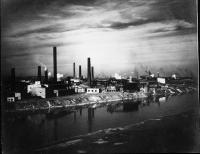
Between 1988 and 2015, Omaha’s approach to lead remediation evolved from limited, site-specific investigations into one of the most extensive urban cleanup efforts in the United States. Early health studies in the late 1980s revealed dangerously elevated blood-lead levels in children living near the American Smelting and Refining Company (ASARCO) plant and other industrial sites. These findings shifted public perception of lead exposure from an industrial issue to a community-wide public health crisis. During the 1990s, regulatory attention expanded from factory emissions to residential soil, prompting new sampling programs and interagency collaboration. Following ASARCO’s closure in 1997, the Environmental Protection Agency designated eastern Omaha as a Superfund site in 2003, transforming remediation from isolated testing into a coordinated federal intervention. From 2003 to 2015, remediation strategies shifted toward large-scale soil excavation, neighborhood engagement, and environmental justice frameworks that emphasized community inclusion and long-term monitoring. This timeline illustrates how scientific evidence, regulatory policy, and civic activism collectively reshaped Omaha’s lead remediation, from reactive containment to proactive prevention.

Environmental Outreach, Community Awareness and Involvement on the Omaha Residential Lead Cleanup Superfund Site
This exhibit dives into the community outreach about the Omaha Lead Superfund Site and the community response to the issues at hand. This includes collections from the Community Advisory Group and their handouts, minutes, and reponses from the community.
Digging Up the Past: An Environmental History of Lead Soil Remediation of Omaha's Schools and Daycares
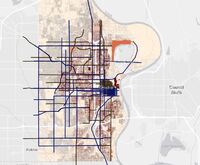
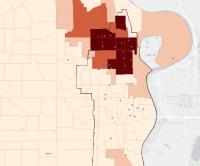
This project's historical and geospatial analysis of lead soil testing and remediation in Omaha’s childcare facilities shows that the city's remediation efforts in schools and daycares effectively addressed an instance of environmental injustice, while also having noticeable limitations.
Leaded Gasoline in Omaha: A History of Filling Stations & Underground Storage Tanks and their Potential Risks
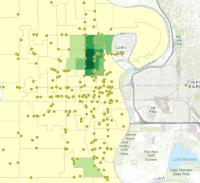
The purpose of this project is to identify where leaded gasoline was stored and distributed around Omaha, where its remnants remain today, and whether the leaded legacy of gasoline use still presents potential risks in the Omaha area.
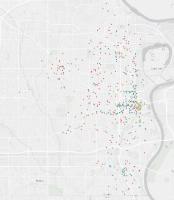
Omaha Occupational Lead Exposure: Investigating point-sources of occupational lead exposure in 1955, 1965, & 1975
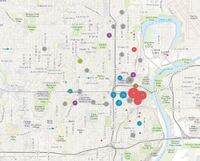
The following research study examines the sources of occupational exposure to lead in the Omaha metropolitan area. Building upon previous methodologies, the research study aims to expand upon prior knowledge regarding lead sources and redirect attention to occupational exposure. The research draws upon city directories to create a GIS map that illustrates where occupational lead exposure was concentrated in 1955, 1965, and 1975. This research deepens our understanding of the impact of lead in workplaces, but also potential community impacts. The latter may inform the distribution of high lead soil concentrations within the Omaha Superfund Site.