2003 NPL listing - Why Omaha Was Chosen for Cleanup
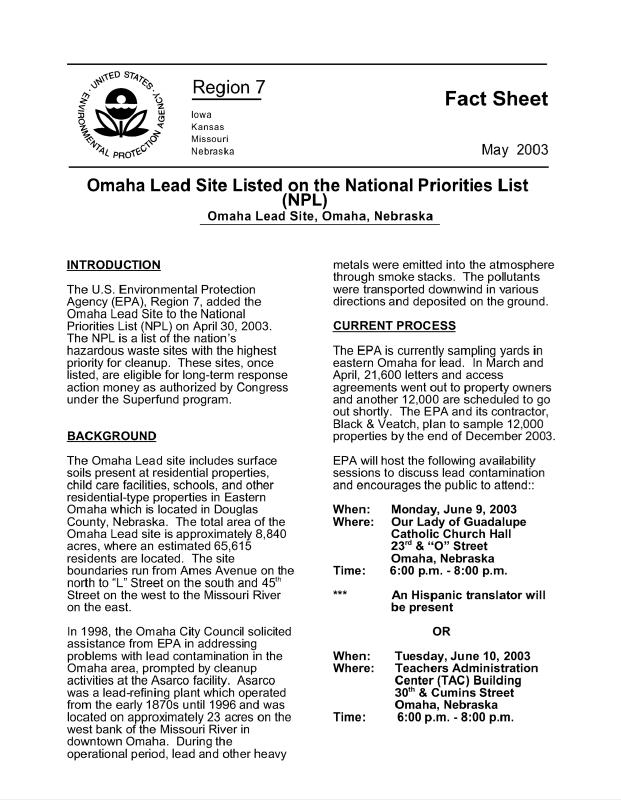
In 2003, the U.S. Environmental Protection Agency officially listed the Omaha Lead Site on the National Priorities List, a designation reserved for the nation's most hazardous waste sites. This decision followed years of local concern and investigation into elevated lead levels in Omaha's eastern neighborhoods, particularly among children. The NPL listing made Omaha eligible for long-term federal cleanup funding under the Superfund program, marking the first step toward sustained environmental remediation.
The decision was based on the pervasive contamination of soils with lead across residential areas, child care centers, and schools. Fine lead particles were airborne in historical emissions from the ASARCO smelter and the Aaron Ferer and Sons/Gould battery recycling plant, and later settled onto residential yards and play areas. Soil sampling and blood-lead data showed by the early 2000s that contamination extended over several thousand properties, creating a chronic health risk.
Listing of the Omaha Site on the NPL demonstrated not only federal recognition of the environmental crisis, but also its commitment to address decades of industrial pollution. This foundational policy action opened the door for later documents, including the 2004 Interim Record of Decision and ongoing Five-Year Reviews, that continue to define Omaha's path toward a cleaner and safer community.
U.S Environmental Protection Agency. “Omaha Lead Site Listed on the National Priorities List.” EPA, Environmental Protection Agency, May 2003, Link
This Omaha World-Herald news article from 2003 shows the lengthy process of adding the Omaha site to the federal Superfund National Priorities List despite the massive lead contamination in thousands of residential yards in the east Omaha neighborhood. At the time, the EPA was already engaged in initial testing for the problem in the area through the implementation of relief measures. However, the process was held back by the objections raised during the public notice period on certain technical issues posed during the process. According to the article, due to the Bush administration’s policies, the process of adding new sites to the Superfund List had come to a standstill. Moreover, Congress had also not reinstated the chemical industry taxes that previously funded the Superfund during the 1980s. However, local leaders argued that in the absence of the official Superfund designation for the site, the tens of millions needed for the cleanup of the contaminated yards might not materialize. Meanwhile, the EPA assured the local community of its plan to test 12,000 yards for toxicity levels and immediately undertake the cleanup work in the most toxic areas where children’s health was most endangered.
This article preserves an essential transition phase in the process of lead cleanup from the initial years of the Superfund to the broader cleanup efforts in the 2000s in response to the public health issue. Additionally, in contrast to the 1980s, the 2003 article indicates that the scale of the cleanup effort in Omaha switched from the industrial sites in the 1980s toward large-scale residential soil removal driven by the EPA in the 2000s. Additionally, the recognition of the elevated levels of blood lead in the children fueled the efforts in the cleanup process by landing on broader interventions coordinated by the federal government. Additionally, the delays in the cleanup process indicated in the article highlight the reasons for the transition in the cleanup process. Since the Superfund industry tax had expired, the national politics had switched, and the listings by the EPA continued to face scrutiny.
Gaarder, N. (2003, February 4). Superfund listing slow to come The designation for lead cleanup now isn't expected before spring.. Omaha World-Herald (NE), p. 4b. Available from NewsBank: Access World News – Historical and Current: https://infoweb-newsbankcom.eu1.proxy.openathens.net/apps/news/document-view?p=WORLDNEWS&docref=news/12DB78969433A950.